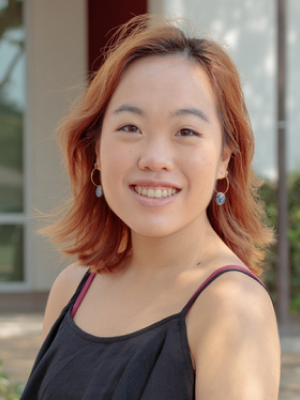
Kyungin Kim

Graduate Student
Kim

Kyungin Kim uses qualitative and quantitative methods to examine (1) how structural inequalities embedded in legal systems create challenging communication environments and limit opportunities for individuals and families facing disproportionate consequences within these systems, including those with immigration and/or incarceration experiences, and (2) how communication practices and message design can attenuate these consequences and promote well-being.

Bio

Name Pronunciation

Kyungin Kim is a Ph.D. candidate in the Department of Communication at the University of California, Santa Barbara. Her research examines how structural inequalities within legal and institutional systems, and their intersections with social marginalization based on race and ethnicity, shape communication experiences and opportunities for historically underserved individuals and families (e.g., undocumented immigrants, migration-separated families, families of incarcerated people). She also investigates how communication practices and message design across interpersonal, family, organizational, and mediated contexts can protect them from harm and promote their well-being. Through this work, she aims to generate translational research that illuminates critical support gaps as well as the rich cultural and social capitals sustaining these communities.

Kyungin’s work can be found in top communication and interdisciplinary journals such as Journal of Communication, Communication Research, Communication Monographs, and Journal of Social and Personal Relationships. Her research has received national recognition, including the Outstanding Thesis Award from the National Communication Association’s Interpersonal Communication Division, and top paper awards from NCA’s Interpersonal Communication Division, Family Communication Division, and Communication and Social Cognition Division. She was also honored with the UCSB Carol Genetti Mentoring Award in 2024, and the UCSB Graduate Division Excellence in Teaching Award in 2026.

Education

M.A. (2024), University of California, Santa Barbara (Communication)

Ed.M. (2021), Harvard University (Prevention Science and Practice)

B.A. (2017), University of Puget Sound (International Political Economy)
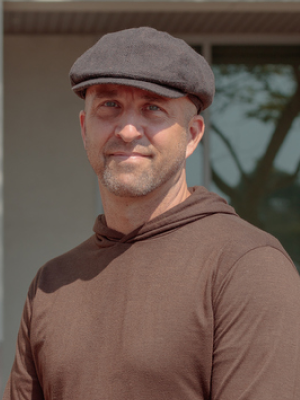
Shawn Hill

Graduate Student
Hill

My research examines how communication and intergroup processes shape social perception, prejudice, trust, empathy, and social relationships between members of different social groups. Drawing on social identity, intergroup communication, and communication accommodation theories, I study these processes primarily in police-community and other criminal legal contexts.

Bio

After 25 years in law enforcement, including service in command positions, I left policing with a question that continues to shape my research: Why are so many communication challenges in policing not informed by decades of communication scholarship?

I am a Ph.D. candidate in Communication at the University of California, Santa Barbara, where I study police–community relationships through the lenses of intergroup communication and Communication Accommodation Theory. My research focuses on how communication shapes trust, legitimacy, and relationships between police and the public, with an emphasis on developing, implementing, and evaluating evidence-based approaches that can be translated into practice.

I am an NIJ LEADS Scholar and Executive Fellow with the National Policing Institute. I am also a co-developer of VOICES, an evidence-informed intergroup dialogue model designed to foster constructive engagement between police and community members. My broader research interests include police communication, intergroup dialogue, communication accommodation, police legitimacy and trust, mixed methods, implementation science, and evidence-based policing.
 

Education

B.A. 2013, Old Dominion University, English
M.A. 2016, Arizona State University, Criminal Jutsice
 

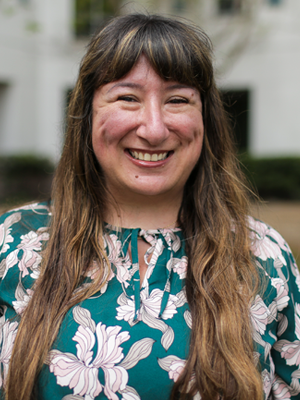
Chloe Gonzales

Graduate Student
Gonzales

Chloe Gonzales’s research explores how individuals and families adapt their communication as they navigate changing relationships and care needs, with particular attention to caregiving, dementia, and aging.

Bio

Chloe Gonzales is a doctoral candidate in the Department of Communication at the University of California, Santa Barbara. Chloe studies both individual experiences and the relationships among people living with dementia, family members, and other individuals in the broader care partner network (e.g., paid caregivers, long-term care staff). She is interested in how communication helps people maintain relationships, coordinate care, and develop shared understandings of illness and caregiving. Her research also considers how these communication practices evolve over time as dementia progresses, relationships shift, and individuals must negotiate evolving needs and roles. 

Ultimately, her research aims to deepen our understanding of the role communication plays in dementia care and to translate this understanding into practices that help families and care partners communicate and coordinate care more effectively. Through this work, she hopes to promote meaningful connection, strengthen individual and relational well-being, and contribute to advocacy of both the challenges and moments of connection that characterize dementia caregiving. Her work developing her theory of rhythmic synergy has been recognized with a Top Paper Award from the Family Communication Division and a Top Thesis Award from the Interpersonal Communication Division at the National Communication Association. She is currently on the job market. 

Education

B.S. (2021), University of Texas at Austin, Communication Studies
M.A. (2023), University of California Santa Barbara, Communication

Carmen Chan

Graduate Student
Chan

Carmen is interested in topics related to mental health and well-being. Her work in the last few years focused on understanding the impacts and opportunities of technology use. Currently, she is studying experiences of uncertainty and coping strategies to expand her perspective.

Bio

Carmen's research seeks to understand ways to improve individuals' mental health and well-being outcomes. She came to UCSB with a history of studying technological interventions for enhancing mental health treatment. More recently, she has begun to look at the impacts of trauma and uncertainty on individuals' social behaviors and psychological health.

Education

B.S. (2019), Cornell University, Communication

M.A. (2023), UC Santa Barbara, Communication

Casey Hankey

Business Officer
Hankey Profile
Bio

Casey is a Santa Barbara native who has worked at UCSB since 2009. She has experience as an undergraduate advisor and student affairs manager from the Psychological & Brain Sciences Department, and academic programs manager at the Bren School of Environmental Science and Management. Most recently, she has been a policy analyst in the Academic Senate, serving both the Council on Faculty Welfare, Academic Freedom and Awards, as well as the Council on Research and Instructional Resources. She has a BA in English and Creative Writing from Columbia University. Her hobbies include cooking (and being a foodie in general), gardening, going on walks, and lap swimming.

As Business Officer, Casey provides management support to the Chair, and establishes and implements administrative objectives and policies for the department. Her responsibilities include academic administration and support, purchasing and financial management, staff oversight, and facilities management. She works closely with the Chair and student affairs staff on department curriculum planning.


Sal Gonzalez

Undergraduate Advisor
Sal Gonzalez
Bio
  • Hablo Español 

Sal is a UCSB alum from the class of 2021. He graduated with B.A.s in Sociology and Chicano/a Studies and minors in LGBTQ+ Studies and Applied Psychology. He is honored to return to UCSB as an Undergraduate Academic Advisor for the Communication Department. He was a transfer student from Santa Barbara City College (SBCC). While studying at SBCC and working as a Peer Mentor for incoming students, Sal became passionate in advocating for underrepresented and marginalized college students. After transferring to UCSB, he was part of the Transfer Student Center and the Educational Opportunity Program, volunteered for CALPIRG and gained research experience working with elementary school students for the department of Counseling, Clinical and School Psychology. Sal is a proud son to a single, immigrant mother from Michoacan, Mexico. He moved to the U.S. in 2014 in hopes of achieving a better life and better educational opportunities. He enjoys painting, exercising, exploring new cultures, traveling to new places, and listening to Latin music and female Hip-Hop. He hopes to pursue and attain a Masters in School Counseling for Higher Education. He is particularly interested in helping first-gen students overcome some of the many challenges he experienced navigating the complex higher education system. 

One of two undergraduate advisors, Sal provides individual academic advising to 1800+ pre- and full- majors in Communication. He advises students and faculty on all aspects of undergraduate affairs (i.e. major requirements, academic planning, course requirements, academic problems, transfer coursework, independent studies, internship opportunities and graduation, etc.). He processes student petitions as needed, interfaces with
other advising offices, and works as a leading team member with student peer advisors. He communicate colleges policies to students and provides input to the Student Affairs Manager, Department Chair, and the Undergraduate Affairs Committee regarding a wide variety of issues affecting students.


Yibei Chen Gains PostDoc Position at MIT

Yibei Chen Portrait
2023-05-09

(Dr.) Yibei Chen will be a Postdoctoral Associate in the Senseable Intelligence Group at the McGovern Institute for Brain Research (MIBR) at the Massachusetts Institute of Technology (MIT) under the supervision of Dr. Satrajit Ghosh. This position will be renewed on an annual basis, maximum four years.