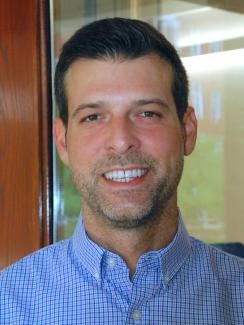
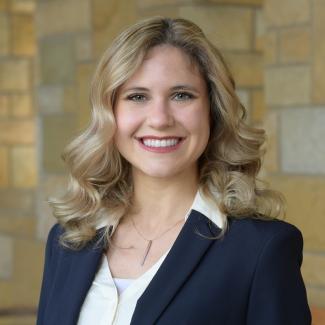
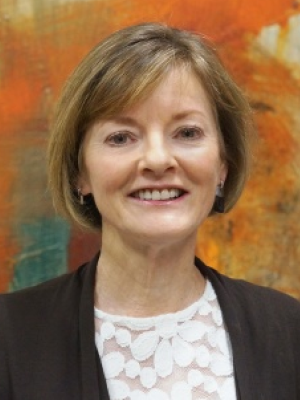
Hyojin Lee

Graduate Student
Lee

Hyojin Lee uses a combination of quantitative and qualitative approaches to study the communication of sensitive subjects, such as immigration status and sexual health, across computer-mediated and interpersonal contexts, with the aim of fostering positive societal effects. Presently, her research delves into how undocumented individuals communicate resilience and thriving to their allies in interpersonal settings, as well as within the online sphere.

Bio

Hyojin Lee is a doctoral student in the Department of Communication at the University of California, Santa Barbara. She received her B.A.s in Culture Design Management and Economics from Yonsei University. She completed her M.A. in Communication at Seoul National University. Hyojin’s research interests lie in the interpersonal communication of taboo topics, especially between close relationships. Based on her experiences as a content creator on YouTube, Hyojin began her master’s research in media psychology and message effects on promoting sexual health. With her background in media effects and her current focus on interpersonal communication, she seeks to understand how online and offline settings are used to communicate and resolve barriers associated with difficult topics. Hyojin works with Dr. Jennifer Kam for The Communication & Empowerment Collaborative.

Education

B.A. (2018), Yonsei University, Culture Design Management & Economics

M.A. (2022), Seoul National University, Communication

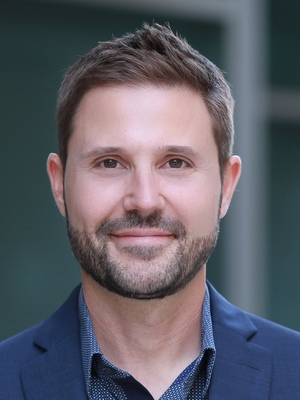
Steven Kubitza

Graduate Student
Kubitza

Steven is a PhD candidate researching the evolution of gig work and the intersection of sport and organizational communication studies.


Bio

Steven Kubitza is a PhD candidate in the Department of Communication at UC Santa Barbara. He received his B.S. in Sport Management from Bowling Green State University and his M.A. in Journalism & Mass Communication from Kent State University.

Steven's current research focuses on the evolution of gig work. Specifically, his research analyzes gig workers at global online news organizations through the lens of CCO. 

His research also spans the context of sport within organizational communication, with a focus on the new age of NIL (Name, Image, Likeness) in collegiate athletics.

Kyungin Kim

Graduate Student
Kim

Kyungin Kim uses qualitative and quantitative methods to examine the impact of immigration and incarceration experiences on youth and families. Specifically, she explores (a) how legal and carceral systems permeate family communication by imposing structural barriers, and (b) the protective and promotive communicative practices families develop in response to these challenges to support their well-being.

Bio

Name Pronunciation

Kyungin Kim is a Ph.D. student in the Department of Communication at the University of California, Santa Barbara. Her research examines how legal and carceral systems, and their intersections with modes of social marginalization such as race, ethnicity, class, immigration status, and gender‚ shape everyday family communication among impacted individuals (e.g., undocumented immigrants, family members of the incarcerated). She also investigates how certain communicative practices that families develop under such circumstances can promote or hinder their well-being. Through her work, she aims to generate translational research that illuminates critical support gaps as well as the rich cultural and social capitals sustaining these families.

Kyungin brings a wealth of research experience from corporate (Airbnb), government (Korea Research Institute for Professional Education and Training), and nonprofit (World Trade Centers Association) settings to her current projects at UCSB, under the mentorship of Dr. Jennifer Kam. Her recent works have been recognized with Top Paper Awards from the Family and Interpersonal Communication Divisions at the National Communication Association. With a passion for teaching, she strives to demystify research terms and processes for students from diverse backgrounds and received the UCSB Mentoring Award in 2024.

Education

M.A. (2024), University of California, Santa Barbara (Communication)

Ed.M. (2021), Harvard University (Prevention Science and Practice)

B.A. (2017), University of Puget Sound (International Political Economy)

Shawn Hill

Graduate Student
Hill

Shawn Hill researches police-community relations, legitimacy, and police culture through the lens of intergroup communication and communication accommodation. His work aims to foster prosocial outcomes by developing, implementing, and evaluating evidence-based communication strategies that promote mutual trust, empathy and support constructive engagement between law enforcement and the communities they serve.

Bio

Shawn Hill is a doctoral student in the Department of Communication at the University of California, Santa Barbara. His research uses quantitative, qualitative, and mixed methods to examine police-community relations, police legitimacy, and police culture through the lens of intergroup communication and communication accommodation theory. Hill is a National Institute of Justice (NIJ) LEADS Scholar and an Executive Fellow with the National Policing Institute. He previously served on the Community Policing Committee of the International Association of Chiefs of Police. His scholarly work includes peer-reviewed journal articles, book chapters, and co-editing The Rowman & Littlefield Handbook on Policing, Communication, and Society, an interdisciplinary volume exploring the intersections of policing and communication. He was awarded a Dissertation Fellowship from the NIJ to study intergroup interventions between police and the public and received the 2025 Putnam Interdisciplinary Scholar Award for his cross-disciplinary collaborations. His work has been published in journals spanning communication, psychology, criminal justice, criminology, and policing. Hill holds a B.A. in English from Old Dominion University and an M.S. in Criminal Justice from Arizona State University.

Chengyu Fang

Graduate Student
Fang

Chengyu Fang studies the adoption and use of emerging technologies and how these technologies shape existing work practices, teams, organizations. His work often focuses on how this process affects issues such as team collaboration and adaptation professional bourrides, and institutional arrangements.

Bio

Chengyu Fang (MA, University of Illinois at Urbana-Champaign) is a PhD candidate in the Department of Communication at the University of California, Santa Barbara. He is a first-generation college student who graduated with a BA degree in Communication and Sociology as well as a BS in Psychology. Chengyu's research focuses on how the use and adoption of emerging technologies such as algorithmic technologies, exoskeletons, and, most recently, generative AI impact our existing collaborative relationships, work practices, teams, organizations, and institutions. His work utilizes both qualitative and quantitative methods and takes a grounded, constitutive approach to understanding technology and organizing. Chengyu has taught several organizational communication and introductory communication classes. His work has been presented in national and international conferences and has been published in journals such as Management, Communication Quarterly, Communication Research, and Human-Machine Communication. Chengyu is also a co-chair of Beyond Academic conference at UCSB.

Education

M.A. (2018), University of Illinois at Urbana-Champaign, Communication

B.S. (2016), University of Illinois at Urbana-Champaign, Psychology

B.A. (2016), University of Illinois at Urbana-Champaign, Double Major in Communication and Sociology

C.V.260 KB

Carmen Chan

Graduate Student
Chan

Carmen is interested in topics related to mental health and well-being. Her work in the last few years focused on understanding the impacts and opportunities of technology use. Currently, she is studying experiences of uncertainty and coping strategies to expand her perspective.

Bio

Carmen's research seeks to understand ways to improve individuals' mental health and well-being outcomes. She came to UCSB with a history of studying technological interventions for enhancing mental health treatment. More recently, she has begun to look at the impacts of trauma and uncertainty on individuals' social behaviors and psychological health.

Education

B.S. (2019), Cornell University, Communication

M.A. (2023), UC Santa Barbara, Communication

Casey Hankey

Business Officer
Hankey Profile
Bio

Casey is a Santa Barbara native who has worked at UCSB since 2009. She has experience as an undergraduate advisor and student affairs manager from the Psychological & Brain Sciences Department, and academic programs manager at the Bren School of Environmental Science and Management. Most recently, she has been a policy analyst in the Academic Senate, serving both the Council on Faculty Welfare, Academic Freedom and Awards, as well as the Council on Research and Instructional Resources. She has a BA in English and Creative Writing from Columbia University. Her hobbies include cooking (and being a foodie in general), gardening, going on walks, and lap swimming.

As Business Officer, Casey provides management support to the Chair, and establishes and implements administrative objectives and policies for the department. Her responsibilities include academic administration and support, purchasing and financial management, staff oversight, and facilities management. She works closely with the Chair and student affairs staff on department curriculum planning.


Sal Gonzalez

Undergraduate Advisor
Gonzalez
Bio
  • Hablo Español 

Sal is a UCSB alum from the class of 2021. He graduated with B.A.s in Sociology and Chicano/a Studies and minors in LGBTQ+ Studies and Applied Psychology. He is honored to return to UCSB as an Undergraduate Academic Advisor for the Communication Department. He was a transfer student from Santa Barbara City College (SBCC). While studying at SBCC and working as a Peer Mentor for incoming students, Sal became passionate in advocating for underrepresented and marginalized college students. After transferring to UCSB, he was part of the Transfer Student Center and the Educational Opportunity Program, volunteered for CALPIRG and gained research experience working with elementary school students for the department of Counseling, Clinical and School Psychology. Sal is a proud son to a single, immigrant mother from Michoacan, Mexico. He moved to the U.S. in 2014 in hopes of achieving a better life and better educational opportunities. He enjoys painting, exercising, exploring new cultures, traveling to new places, and listening to Latin music and female Hip-Hop. He hopes to pursue and attain a Masters in School Counseling for Higher Education. He is particularly interested in helping first-gen students overcome some of the many challenges he experienced navigating the complex higher education system. 

One of two undergraduate advisors, Sal provides individual academic advising to 1800+ pre- and full- majors in Communication. He advises students and faculty on all aspects of undergraduate affairs (i.e. major requirements, academic planning, course requirements, academic problems, transfer coursework, independent studies, internship opportunities and graduation, etc.). He processes student petitions as needed, interfaces with
other advising offices, and works as a leading team member with student peer advisors. He communicate colleges policies to students and provides input to the Student Affairs Manager, Department Chair, and the Undergraduate Affairs Committee regarding a wide variety of issues affecting students.


Yibei Chen Gains PostDoc Position at MIT

Yibei Chen Portrait
2023-05-09

(Dr.) Yibei Chen will be a Postdoctoral Associate in the Senseable Intelligence Group at the McGovern Institute for Brain Research (MIBR) at the Massachusetts Institute of Technology (MIT) under the supervision of Dr. Satrajit Ghosh. This position will be renewed on an annual basis, maximum four years.